
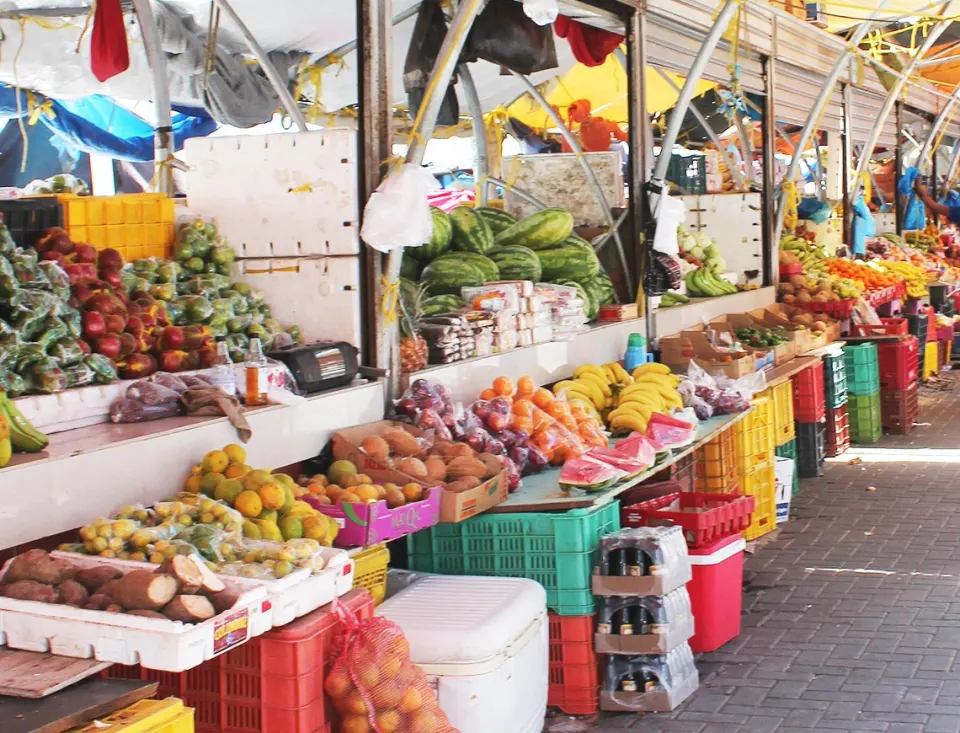
The floating market: produce and fish from across the water
Boats from Venezuela tie up at the Waaigat and sell what they brought: mango, papaya, bananas, fish. It is not a tourist attraction dressed up as a market. It is a market.
1 min read Curaçao
Along the Sha Caprileskade, on the Waaigat inlet in Punda, boats moor up having come from the Venezuelan mainland. They sell what they carry: fruit, vegetables, sometimes fish. The stalls stand under awnings on the quay, right beside the boats the goods came off.
What you will find
Mango, papaya, watermelon, varieties of banana you will not see at home, avocados the size of a fist, and generally whatever travels well. Prices are not always marked; asking is part of it, and haggling is not thought odd, though the sums involved are small.
When to go
Mornings. The market starts early and by late afternoon most of it has been packed away. Sundays are quiet.
If you have rented a house and want to cook, this is a nicer place to buy fruit than the supermarket, and considerably fresher.
Why it exists
Curaçao lies about sixty kilometres from Venezuela, closer to the South American mainland than to most other islands. The market exists because that crossing is short. Supply has been variable in recent years given the situation in Venezuela, so how many boats are moored varies by period.
Also worth reading
 Beaches and bays
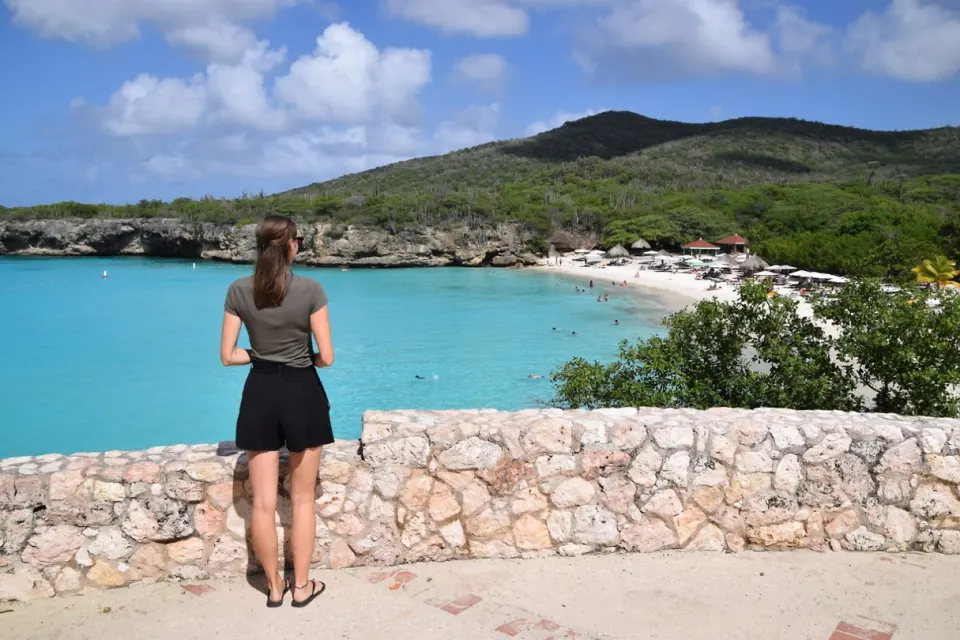
Grote Knip: the beach from the postcards
White sand, water in three shades of blue and a cliff to jump off. Grote Knip is the beach on every photo of Curaçao, and the drive is worth it.
 Beaches and bays
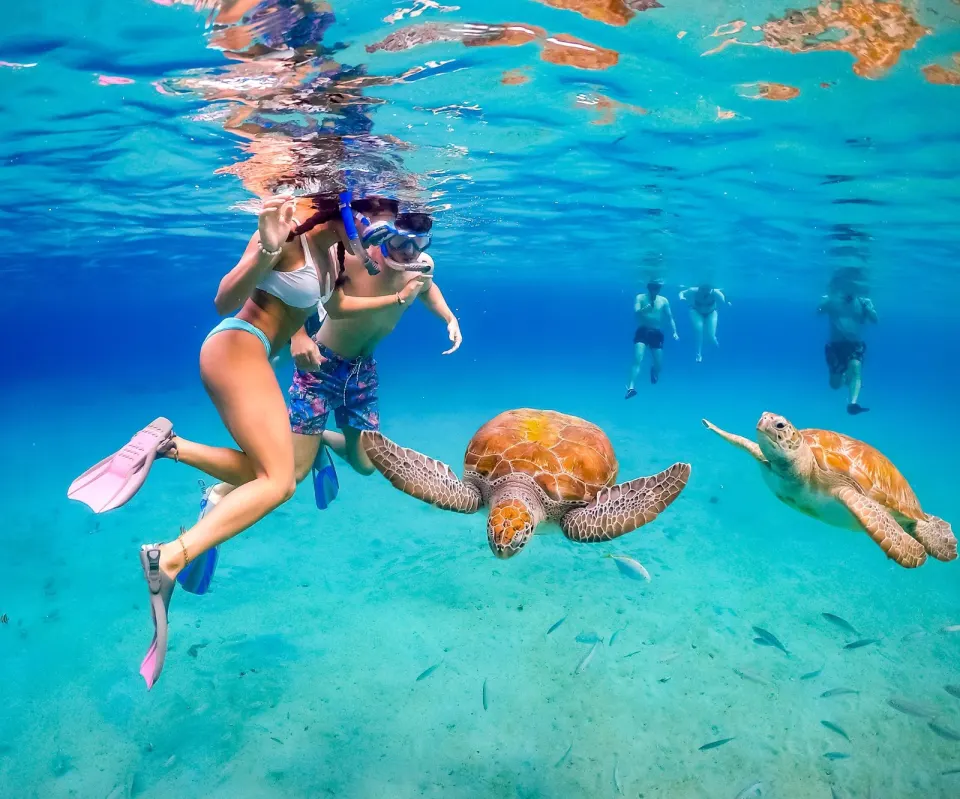
Swimming with sea turtles at Playa Piskado
A working fishing harbour where green sea turtles come for what is left of the catch. No tour, no fence, no entry fee.
 Things to do
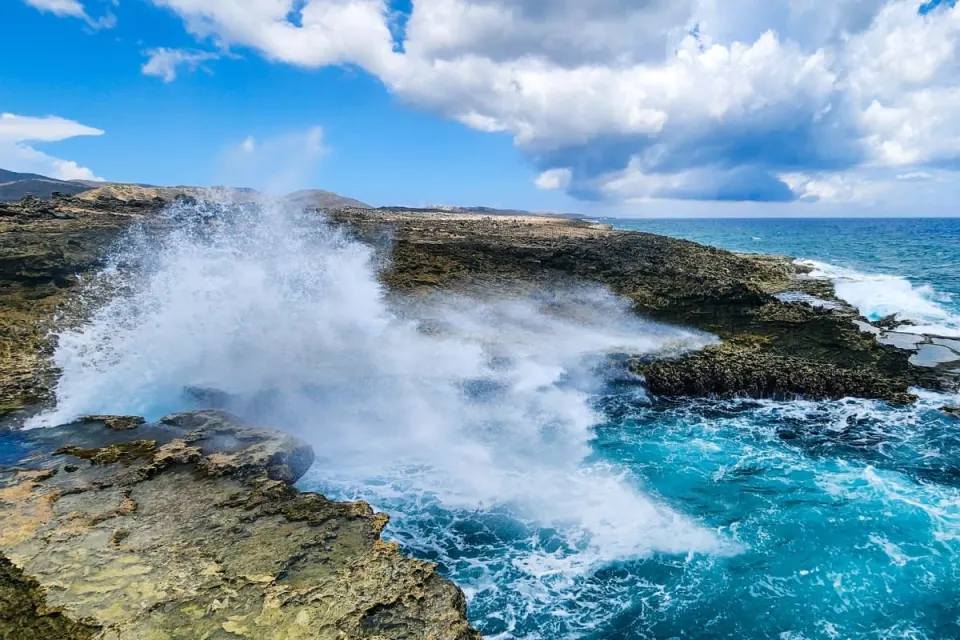
Shete Boka: the rough side of Curaçao
Seven bays on the north coast where the ocean arrives with force. Not swimming water, but the most striking stretch of coast on the island.